Abstract
The proliferation of Small Arms and Light Weapons (SALWs) has emerged as a major driver of insecurity across the BAY States of Borno, Adamawa, and Yobe, exacerbating violent conflicts, criminal activities, and community displacement. The study examined the prevalence, risk factors, and impacts of SALWs proliferation on internal security, as well as the effectiveness of existing government policies and potential strategies to curb illicit arms circulation. A systematic mixed-methods approach was employed, integrating quantitative and qualitative techniques to ensure methodological triangulation and robust findings. Quantitative data were collected from 395 respondents through structured questionnaires, while qualitative insights were obtained from 30 key informants via in-depth interviews, including security personnel, community leaders, and civil society actors. The results indicate that SALWs proliferation remains alarmingly high, with over two-thirds of respondents reporting increased availability and widespread access in their communities. The result indicates that there is a statistically significant and positive relationship between all the identified risk-factors: unemployment and poverty (χ2 = 276.78, p < 0.001), ineffective border management (χ2 = 212.05, p < 0.001), communal violence (χ2 = 226.05, p < 0.001), corruption (χ2 = 348.66, p < 0.001), and political instability (χ2 = 231.27, p < 0.001)—have a statistically significant and positive relationship with the prevalence of SALWs proliferation in the BAY States. The result further revealed that SALWs proliferation has a significant and multidimensional negative effect on internal security, manifesting in violent conflicts, criminality, displacement, and the erosion of state authority. The result also revealed that there is a statistically significant and negative relationship between implementation challenges and the effectiveness of arms control policies, confirming that arms control policies were largely perceived as ineffective due to poor enforcement, institutional fragmentation, and policy gaps. The study concludes that SALWs proliferation in the BAY States is sustained by a complex interplay of socio-economic, institutional, and political factors, posing severe threats to internal security. Based on these findings, it is recommended that the government strengthen border security, enhance inter-agency coordination, enforce firearms laws strictly, implement youth-focused economic empowerment programs, and engage communities through awareness campaigns and collaborative disarmament initiatives. These measures are critical to curbing illicit arms circulation and fostering sustainable security in the region.
Keywords
Small Arms and Light Weapons (SALWs), Arms Proliferation, Internal Security, BAY States
1. Introduction
The proliferation of small arms and light weapons (SALWs) has emerged as one of the most pressing global security threats, undermining peace, stability, and development across all levels. With an estimated one billion firearms in circulation—875 million of which are held by civilians—the world faces a dangerous imbalance that fuels civil wars, terrorism, organized crime, and violent extremism
| [63] | Saferworld. (2012). Small arms proliferation and conflict in West Africa. London: Saferworld Publications. |
| [67] | Small Arms Survey. (2017). Global small arms survey.
https://www.smallarmssurvey.org |
[63, 67]
. Small arms account for over 2,000 deaths daily and between 500,000 and 750,000 annually, prompting former UN Secretary-General Kofi Annan (2000) to describe them as “weapons of mass destruction” due to their devastating human toll
| [45] | Kytömäki, S. (2015). Small arms and light weapons as tools of insecurity: A global perspective. International Journal of Peace Studies, 20(2), 45–67. |
[45]
. Despite decades of international interventions, the uncontrolled spread of SALWs continues to sustain contemporary conflicts and terrorist activities—from Al-Qaeda in the Maghreb and Al-Shabaab in East Africa to ISIS in the Middle East and ISWAP in the Lake Chad Basin—highlighting the failure of global arms control frameworks to contain the growing influence of non-state armed actors
| [72] | U.S. Department of State. (2023). Global threats and small arms proliferation report. Washington, DC: USGPO. |
[72]
.
In Nigeria, the proliferation of illicit arms has reached an alarming threshold. An estimated 6.15 million SALWs are currently in the possession of non-state armed groups—including Boko Haram, ISWAP, bandits, secessionist groups, and criminal networks—compared to just over 586,000 in the hands of the Nigerian security forces
| [23] | Dakuku, F. (2023). Illicit arms proliferation and non-state armed groups in Nigeria. Abuja: Nigerian Security Watch. |
[23]
. This tenfold imbalance demonstrates not only the scale of the threat but also the failure of successive disarmament and arms control initiatives
| [7] | Alemika, E. (2018). Politics of arms proliferation and security challenges in Nigeria. Lagos: CLEEN Foundation. |
[7]
. Despite multiple government efforts—including the 1973 “3Rs” policy, the 2009 Niger Delta Amnesty Program, the 2016 DDRR initiative, and the establishment of the National Centre for the Control of Small Arms and Light Weapons (NCCSALW) under the 2024 Arms and Weapons Control Act—Nigeria remains awash with illegal weapons. The recovery of over 5,000 munitions by the military in just four months in 2023
attests to the magnitude of the crisis and the persistence of illicit arms inflows through porous borders and internal trafficking networks.
Nowhere is this problem more acute than in North-East Nigeria—the epicenter of the Boko Haram insurgency and ISWAP terrorism. The region’s porous borders with Cameroon, Niger, and Chad have transformed it into a hub for cross-border arms smuggling, facilitating a steady supply of weapons to insurgent groups and criminal networks. The resulting insecurity has devastated communities in Borno, Adamawa, and Yobe (the BAY states), leading to massive displacement, widespread casualties, and deep socio-economic dislocation.
Despite the growing body of scholarship on the proliferation of small arms and light weapons (SALWs) and their implications for peace and security, several gaps persist in the existing literature. Most prior studies have largely examined the general causes and consequences of SALW proliferation
| [4] | Afegbua, T., & Oladimeji, O. (2023). Armed violence and small arms proliferation in Nigeria: Implications for peace and security. Lagos: Nigerian Institute of Strategic Studies. |
| [11] | Aver, I., Nnorom, C., & Ilim, F. (2014). Small arms proliferation and armed banditry in Northern Nigeria. Kaduna: Northern Security Review. |
| [68] | Sule, M., Mikail, A., & Yahaya, L. (2020). Socio-political implications of small arms proliferation. Zaria: NDA Press. |
[4, 11, 68]
, focusing broadly on insecurity, armed banditry, and violence. However,
the complex linkages between SALWs proliferation and internal security dynamics remains understudied. Furthermore, while existing works acknowledge the influence of porous borders, weak governance, and socioeconomic deprivation, few studies have systematically interrogated how these structural conditions interact with arms inflows to sustain protracted insecurity
. Geographically, several studies (e.g.,
| [4] | Afegbua, T., & Oladimeji, O. (2023). Armed violence and small arms proliferation in Nigeria: Implications for peace and security. Lagos: Nigerian Institute of Strategic Studies. |
| [34] | Halidu, A., & Dennis, B. (2023). Small arms proliferation and insecurity in Kaduna State: A mixed-methods study. Kano: University Press. |
| [69] | Sule, M., Mikail, A., & Yahaya, L. (2020). Weak institutions and SALW proliferation. Zaria: NDA Press. |
[4, 34, 69]
) have concentrated on Northern Nigeria and parts of the North-West, there is a dearth of localized empirical research specifically focusing on the North-East subregion, which remains the epicenter of Boko Haram and ISWAP insurgencies. Methodologically, the vast majority of previous works employed qualitative secondary analyses relying on document review (e.g.,
| [24] | Danwanzam, M., Saleh, A., & Stephen, L. (2019). Small arms and light weapons in conflict zones: Policy perspectives from Nigeria. Jos: Conflict and Development Studies. |
[24, 40
,
71]). While these studies provide valuable insights, they often lack primary data engagement with local actors, security agencies, and affected communities
whose lived experiences could deepen understanding of the proliferation problem. Only a few studies (e.g.,
| [10] | Andrew, J., Ochaja, J., & Asala, D. (2024). Mixed-methods analysis of small arms proliferation and local security dynamics in North-East Nigeria. Abuja: Centre for Security Studies. |
| [34] | Halidu, A., & Dennis, B. (2023). Small arms proliferation and insecurity in Kaduna State: A mixed-methods study. Kano: University Press. |
| [9] | Andrew, J., Ochaja, J., & Asala, D. (2024). Local realities of SALW control: A case study of Otukpo LGA, Benue State. Abuja: Centre for Security Studies. |
[10, 34, 9]
) utilized mixed methods, and even then, their scope remained limited to state or local government levels.
This paper is therefore justified by the urgent need to generate evidence-based insights into how SALWs proliferation interacts with local security architecture, border management systems, and community resilience in the BAY states. By bridging the identified gaps, the study provides a current and localized understanding of the security implications of SALWs in Nigeria’s most volatile region. This will contributes to the ongoing scholarly and policy debates on arms proliferation and internal security by offering a context-specific, empirically grounded analysis of the North-East Nigeria situation, and also offers actionable strategies for policymakers, security agencies, and development partners seeking to curb SALWs proliferation and promote sustainable peace in conflict-affected regions of Nigeria.
2. Literature Review: Empirical Review and Theoretical Perspectives
2.1 Conceptual Review
2.1.1 Proliferation of Small Arms and Light Weapons (SALW)
The debate over what constitutes
Small Arms and Light Weapons (SALW) remains unsettled, reflecting both definitional ambiguity and geopolitical contention
| [35] | Halidu, A., & Dennis, B. (2023). Small arms proliferation and regional insecurity in Northern Nigeria: A mixed-methods study. Kano: University Press. |
| [42] | Kaduna State SALWs Study. (2010–2020). Annual report on small arms proliferation and armed violence in Kaduna State. Kaduna: Kaduna State Security Directorate. |
[35, 42]
. The UN
| [73] | UN. (1997). Report on small arms and light weapons. New York, NY: United Nations. |
[73]
draws a distinction based on use—small arms as personal-use weapons and light weapons as crew-operated—yet this categorization has been challenged for oversimplifying a rapidly evolving technological reality
| [14] | Behera, L. (2001). Small arms and light weapons: Global challenges and policy dilemmas. New Delhi: Institute for Defence Studies. |
| [25] | Dikshit, R. (1994). Global arms trade and the proliferation of small arms. New Delhi: Kalinga Publications. |
[14, 25]
. Scholars such as Boutwell, Klare, and Reed
| [16] | Boutwell, J., Klare, M., & Reed, B. (1999). Small arms and light weapons: A global overview. Washington, DC: World Policy Institute. |
[16]
argue that these categories are increasingly blurred, as modern compact weaponry transcends traditional size-based distinctions. Consequently, the definitional inconsistency does not merely represent a semantic issue but rather a policy dilemma that complicates international regulation and enforcement.
While ECOWAS
| [28] | ECOWAS. (2006). Convention on small arms and light weapons control in West Africa. Abuja: ECOWAS Commission. |
[28]
and UNIDIR
| [74] | UNIDIR. (2016). Small arms and light weapons: Global trends. Geneva: UNIDIR. |
[74]
attempt a standardized classification within Africa and globally, critics contend that such definitions ignore local realities, where even rudimentary weapons can destabilize entire regions. Indeed, the portability and accessibility of SALW have democratized violence—empowering non-state actors, insurgents, and criminals—thus challenging the state’s monopoly on legitimate force
| [63] | Saferworld. (2012). Small arms proliferation and conflict in West Africa. London: Saferworld Publications. |
[63]
. The conceptual disagreement over SALW, therefore, is inherently political: whether they should be viewed as symbols of state weakness, instruments of resistance, or tools of transnational profiteering. What is beyond debate, however, is that their proliferation—licit or illicit—represents a profound threat to human and national security in fragile states like Nigeria.
2.1.2. Concept of Internal Security
Security, though often perceived as the absence of threat, remains a multidimensional and contested construct. Traditional notions, as articulated by Chaturvedi
| [20] | Chaturvedi, S. (2006). Conceptualizing security: Traditional and contemporary approaches. New Delhi: Sage Publications. |
[20]
, focus narrowly on physical protection, but contemporary scholars such as Dzurgba
| [27] | Dzurgba, A. (2010). Broadening security perspectives: Social, economic, and environmental dimensions. Port Harcourt: University of Port Harcourt Press. |
[27]
and Egwu
| [30] | Egwu, S. (2001). Ethno-religious conflicts and security challenges in Nigeria. Ibadan: Spectrum Books. |
[30]
broaden the concept to include social, economic, and environmental safety. This evolution underscores that security is both a
condition and a
process—a dynamic equilibrium between freedom from fear and the institutional capacity to manage threats.
National security, in particular, has transcended its military roots to encompass socio-economic stability, governance, and human welfare
| [59] | Orngu, T. (2010). National security and socio-economic stability in Nigeria. Jos: Plateau University Press. |
| [60] | Prabhakaran, S. (2008). Rethinking national security. New Delhi: Sage Publications. |
[59, 60]
. Yet, this broadening raises a key debate: does expanding security to include every societal concern dilute its strategic essence or strengthen its holistic utility? While realists argue for state-centered defense, human security advocates posit that the protection of citizens—not borders—is the truest measure of national stability. For Nigeria, internal security must, therefore, be understood not only as protection from external aggression but also as freedom from domestic threats such as armed violence, corruption, marginalization, and the unregulated proliferation of SALW.
2.1.3. Historical Overview of SALW Proliferation in Nigeria
The proliferation of SALW in Nigeria is neither recent nor accidental—it is a historical continuum shaped by colonial intrusion, civil conflict, and post-war neglect. From precolonial African militarization, such as Shaka’s
assegai and Samori Touré’s firearm production
| [62] | Roland, A., & Atmore, E. (2005). African military history. London: Routledge. |
[62,
, to European gun imports that transformed weapons from tools of hunting to symbols of power
| [41] | Imobighe, T. (1989). Nigeria’s military history and arms proliferation. Lagos: Nigerian Defence Academy Press. |
[41]
, the foundations of Nigeria’s arms culture were laid early. The Nigerian Civil War (1967–1970) marked a turning point, institutionalizing domestic arms innovation and diffusion, notably through the Biafran Research and Production Unit’s local weapon designs like the
Ogbunigwe | [32] | Emordi, A., & Oseghale, P. (2008). Biafra war innovations: Indigenous weapons and technological adaptation. Benin City: University of Benin Press. |
[32]
.
Post-war Nigeria failed to demilitarize effectively; instead, wartime arms flowed into civilian hands, fueling communal conflicts and insurgencies
| [29] | Edeko, F. (2011). Economic consequences of arms proliferation in Nigeria. Abuja: Centre for Economic Studies. |
| [53] | Ogu, U. (2012). Socio-economic determinants of small arms proliferation in Nigeria. Port Harcourt: Rivers State University Press. |
[29, 53]
. Locally fabricated weapons such as the Tiv “
Ijor Gbudughur”—illustrate how indigenous technology sustained armed violence
| [13] | Bah, A. B. (2014). Regional approaches to small arms control: ECOWAS challenges and prospects. Dakar: Institute for Peace and Security Studies. |
[13]
. The argument here is clear: the persistence of SALW proliferation in Nigeria is less about external supply than internal governance failure
| [29] | Edeko, F. (2011). Economic consequences of arms proliferation in Nigeria. Abuja: Centre for Economic Studies. |
[29]
. Weak border control, corruption, and socio-economic grievances perpetuate a cycle where arms not only secure livelihoods but also sustain insecurity
| [15] | Blattman, C., & Miguel, E. (2010). Civil war. Journal of Economic Literature, 48(1), 3–57.
https://doi.org/10.1257/jel.48.1.3 |
| [33] | Florquin, N., & Berman, E. (2005). Arms proliferation and governance challenges: Comparative perspectives. Geneva: Small Arms Survey. |
[15, 33]
.
Thus, the historical trajectory of arms proliferation in Nigeria reveals a paradox—while weapons were initially symbols of resistance and sovereignty, they have evolved into instruments of state fragility and social disintegration
| [39] | Idehen, A., & Subair, H. (2021). History and impact of SALWs in Nigeria: A descriptive analysis. Ibadan: Security and Governance Journal. |
[39]
. This dynamic underscores the urgent need to rethink both conceptual clarity and policy frameworks on SALW control within the broader discourse of internal security and national development.
2.1.4. Factors Responsible for Small Arms and Light Weapons Proliferation in Nigeria
One of the foremost socio-economic drivers of SALW proliferation in Nigeria is rampant youth unemployment. Years of poor governance, economic mismanagement, and weak social welfare systems have left millions of youths without meaningful livelihoods. As Utsaha
| [75] | Utasha, J. (2016). Youth unemployment and the illegal arms economy. International Journal of Development and Conflict, 6(2), 89–105. |
[75]
notes, many unemployed youths resort to crime and illicit arms production or trafficking as survival strategies. While government initiatives such as SURE-P, NAPEP, and YOUWIN were introduced to alleviate unemployment, their poor implementation and discontinuation only worsened the situation, pushing desperate youths into the illegal arms economy. This structural neglect has entrenched a dangerous relationship between poverty, crime, and weapon circulation.
Political rivalry and elite complicity further deepen the problem. Since Nigeria’s return to democratic rule in 1999, the competition for political power has become increasingly violent. Politicians frequently recruit and arm unemployed youths as political thugs to intimidate opponents and manipulate elections (Abubakar, Ahmed & Babayo, 2018)
| [1] | Abubakar, A., Ahmed, M., & Babayo, I. (2018). Youth militancy and political thuggery in Nigeria: Implications for democratic governance. Kaduna: Centre for Democratic Studies. |
[1]
. The case of the 2013 local government elections in Gombe, where armed groups like the Yan Kalare were used to disrupt the process, is illustrative of this trend. After elections, these thugs retain their weapons and turn to criminality, perpetuating a cycle of insecurity. Although some governors, such as Samuel Ortom in Benue State, have implemented amnesty programs, their limited success underscores the state’s failure to disarm and reintegrate armed groups effectively.
Ethno-religious conflicts have also played a central role in fueling arms proliferation. As Egwu
| [30] | Egwu, S. (2001). Ethno-religious conflicts and security challenges in Nigeria. Ibadan: Spectrum Books. |
[30]
explains, Nigeria’s overlapping ethnic and religious identities have transformed communal tensions into recurring armed confrontations. Crises such as the Hausa-Kataf clashes, the Kaduna Sharia riots, and the Jos conflicts have led to widespread killings and displacements, with over 187 recorded incidents between 1999 and 2019
| [64] | Salihu, H., & Hassan, I. (2020). Ethno-religious intolerance and arms acquisition. Nigerian Journal of Political Science, 25(2), 201–223. |
[64]
. The persistent recurrence of these conflicts has normalized gun ownership among ethnic and religious groups seeking self-defense or revenge, thereby further entrenching weapon circulation in civilian hands.
Institutional corruption within the security sector represents perhaps the most troubling dimension of the problem. Instead of serving as custodians of law and order, some members of the armed forces, police, and customs service have become active participants in arms trafficking. Ehiane and Uwieyimana
| [31] | Ehiane, P., & Uwizeyimana, F. (2018). Military involvement in illicit arms trade in West Africa. Lagos: African Security Review. |
[31]
reveals that significant portions of illicit firearms in circulation originate from leakage within the Nigerian military and police stockpiles. Reports such as the 2014 case involving an army colonel accused of smuggling arms through the Seme Border
and the 2017 incident of a soldier selling ammunition to Boko Haram, Ehiane & Uwizeyimana,
| [31] | Ehiane, P., & Uwizeyimana, F. (2018). Military involvement in illicit arms trade in West Africa. Lagos: African Security Review. |
[31]
confirm the extent of institutional decay. Former President Olusegun Obasanjo’s acknowledgment of security agents’ complicity
| [52] | Nwanolue, B., & Iwuoha, C. (2012). Security agents and arms leakage in Nigeria: Policy implications. Lagos: Nigerian Security Review. |
[52]
underscores how state actors have become both victims and enablers of the same menace they are mandated to combat.
Externally and internally, multiple sources sustain the flow of SALW in Nigeria. Porous borders, spanning over 4,200 kilometers with neighboring countries such as Benin, Niger, Chad, and Cameroon, remain the primary channels for smuggled arms
| [54] | Oke, F. (2002). Porous borders and arms trafficking in West Africa. Lagos: Nigerian Institute for Security Studies. |
[54]
. Smugglers exploit hundreds of unmanned routes to traffic weapons into the country, with an estimated 21 million arms smuggled in 2017 alone
| [37] | Ibrahim, H. (2015). Governance failure and small arms proliferation in West Africa. Abuja: Nigerian Institute of International Affairs. |
[37]
. Internally, the situation is compounded by frequent attacks on police stations and armories, resulting in weapon theft
| [75] | Utasha, J. (2016). Youth unemployment and the illegal arms economy. International Journal of Development and Conflict, 6(2), 89–105. |
[75]
. Armed vigilante groups like the Bakassi Boys, separatist movements such as MASSOB and IPOB, and locally fabricated firearms from blacksmiths have further expanded the domestic weapons market
| [5] | Ahmed, S. (2002). Local vigilante groups and community security in Nigeria. Lagos: Nigerian Institute of Security Studies. |
| [51] | Nwankwo, A., & Udeh, C. (2005). Vigilante groups and the proliferation of small arms in Nigeria. Enugu: University of Nigeria Press. |
[5, 51]
. Additionally, Nigerian soldiers returning from peacekeeping operations in Liberia and Sierra Leone have reportedly smuggled weapons back home for profit
| [26] | Dokubo, C. (2003). Arms smuggling and the Nigerian security landscape. Lagos: Nigerian Institute of International Affairs. |
| [76] | Voice of America. (2016, March 22). Nigerian soldiers smuggle arms. VOA News. https://www.voanews.com |
[26, 76]
.
2.2. Empirical Review
Empirical studies on the proliferation of Small Arms and Light Weapons (SALWs) in Nigeria present a rich but uneven body of evidence that highlights the multifaceted nature of the crisis. While these studies offer valuable insights into the drivers, patterns, and implications of SALW proliferation, they vary significantly in methodological rigor, theoretical framing, and policy relevance—revealing both strengths and weaknesses that this present study seeks to address.
From opportunity-based perspective, empirical studies
| [12] | Ayangaor, P. (2016). Indigenous weapons and local conflict dynamics in Nigeria. Jos: Plateau University Press. |
| [57] | Onuoha, F. (2014). ECOWAS and regional security. Lagos: African Security Studies. |
| [60] | Prabhakaran, S. (2008). Rethinking national security. New Delhi: Sage Publications. |
| [70] | Tonwe, K., & Okoro, P. (2018). Border porosity and arms trafficking. Lagos: IPSS. |
[12, 57, 60, 70]
, argue that individuals are rational actors who seek to maximize benefits while minimizing costs in the pursuit of their needs and aspirations. Within this framework, poverty, unemployment, and inequality are identified as structural conditions that expand opportunities for illicit economic activities, including the proliferation of Small Arms and Light Weapons (SALWs). The cost–benefit logic underlying this perspective suggests that engagement in illegal arms economies and participation in armed robbery, kidnapping, banditry, and other violent enterprises becomes attractive when legitimate economic opportunities are scarce and the perceived rewards of criminality outweigh the risks
. Consequently, the availability and acquisition of illegal arms are interpreted as instruments for achieving economic gain within contexts of deprivation. Empirical evidence from Nigeria supports this position. Utasha
| [75] | Utasha, J. (2016). Youth unemployment and the illegal arms economy. International Journal of Development and Conflict, 6(2), 89–105. |
[75]
, in a study on youth unemployment and the illegal arms economy, employed a mixed-method design combining survey data with key informant interviews. The study found a significant positive relationship between unemployment rates and participation in illicit arms markets, concluding that joblessness creates a reservoir of recruits for criminal networks. Similarly, Collier’s Greed and Grievance model demonstrated through econometric analysis that economic incentives—rather than purely ideological motivations—largely explain the persistence of armed groups and the circulation of weapons in fragile states
. These findings are consistent with broader cross-national studies which identify poverty as one of the most robust predictors of arms economies and youth participation in violent conflict
| [55] | Okeke, O. (2015). Youth unemployment and armed violence in Nigeria: Policy perspectives. Abuja: National Institute for Policy Studies. |
| [66] | Small Arms Survey. (2015). Small arms survey 2015. Cambridge University Press. |
[55, 66]
.
A number of African scholars, using qualitative approaches, further emphasize the material conditions of youth as a catalyst for illegal arms acquisition. For instance, Ibrahim and Igbuzor
| [38] | Ibrahim, J., & Igbuzor, O. (2018). Youth unemployment and violent crime in northern Nigeria: A qualitative assessment. Journal of African Transformation, 3(1), 77–95. |
[38]
conducted focus group discussions in northern Nigeria and reported that failed development policies, endemic corruption, and the collapse of public services have produced large populations of unemployable youth who are easily mobilized into armed violence. Okeke
| [55] | Okeke, O. (2015). Youth unemployment and armed violence in Nigeria: Policy perspectives. Abuja: National Institute for Policy Studies. |
[55]
, through ethnographic fieldwork in the Niger Delta, similarly observed that feelings of deprivation and exclusion push young people toward armed groups that promise income and social recognition. These studies converge on the argument that socioeconomic marginalization generates vulnerability to recruitment into violent criminality. However, the economic-deterministic literature has been criticized for reducing arms proliferation to material deprivation alone. Critics argue that such explanations ignore the multiplicity of interacting factors, particularly political and ethno-religious dynamics, which shape motivations for acquiring weapons
| [8] | Alemika, E. E. O. (2017). The political economy of violence and arms proliferation in Nigeria. Nigerian Journal of Social and Development Studies, 6(1), 23–41. |
[8]
.
The ethno-religion-based perspective contends that intolerance and identity polarization constitute independent drivers of SALWs diffusion. In a quantitative survey of 1,200 respondents across Kaduna and Plateau States, Salihu and Hassan
| [64] | Salihu, H., & Hassan, I. (2020). Ethno-religious intolerance and arms acquisition. Nigerian Journal of Political Science, 25(2), 201–223. |
[64]
found that perceived religious discrimination significantly predicted willingness to possess firearms, even after controlling for income and education. Likewise, Mustapha
| [48] | Mustapha, A. R. (2014). Communal conflicts and the demand for small arms in Jos, Nigeria. African Conflict & Peacebuilding Review, 4(2), 55–78. |
[48]
, using qualitative interviews with community leaders in Jos, revealed that cycles of communal violence and fear of “the other” stimulated local demand for weapons for self-defence. Beyond Nigeria, Kalyvas
demonstrated in a comparative study of Kenya and Tanzania that ethnic insecurity, rather than poverty alone, explained differential patterns of arms acquisition among communities.
The hybrid perspective integrates socioeconomic and political variables as a critical drivers of illegal arms proliferation. Brown and Stewart
argue that violent criminality and arms proliferation are most likely where horizontal inequalities—economic, political, and cultural—overlap. Their cross-country quantitative analysis of 55 developing states showed that regions experiencing simultaneous economic deprivation and political exclusion recorded higher rates of weapons circulation. In Nigeria, Akinola
applied this framework using a survey in the North-East and found that communities reporting both unemployment and political marginalization were twice as likely to harbour armed groups compared to those experiencing only one form of inequality. This suggests that intersecting grievances, rather than single factors, create fertile ground for SALWs markets.
From the political-based literature, scholars highlight the instrumental role of elites in arming youth for electoral competition
| [36] | Human Rights Watch. (2019). Nigeria: Politics as war – The human rights impact of political violence in Nigeria.
https://www.hrw.org |
| [46] | Mohammed, K. S., & Yusuf, A. M. (2022). Electoral politics and illegal arms proliferation in Nigeria. Journal of Contemporary African Studies, 40(3), 411–429.
https://doi.org/10.1080/02589001.2022.2041123 |
| [56] | Okeke, V. O. (2019). Deprivation and violence in the Niger Delta. African Journal of Criminology and Justice Studies, 12(1), 101–120. |
| [58] | Onyango, E. (2018). Electoral violence and small arms in East Africa. Conflict, Security & Development, 18(5), 421–440.
https://doi.org/10.1080/14678802.2018.1521167 |
[36, 46, 56, 58]
. Human Rights Watch
| [36] | Human Rights Watch. (2019). Nigeria: Politics as war – The human rights impact of political violence in Nigeria.
https://www.hrw.org |
[36]
documented, through investigative interviews, how politicians in several Nigerian states supplied weapons to thugs during elections, many of which remained in circulation afterwards. A quantitative study by Mohammed and Yusuf
utilizing regression analysis of police crime records established a significant correlation between election periods and spikes in illegal arms seizures. Similar patterns have been observed in Sierra Leone and Kenya, where post-electoral violence was linked to earlier patronage networks that distributed firearms to supporters
. These studies portray political entrepreneurship as a critical but often underestimated source of SALWs proliferation.
The security-based literature attributes arms diffusion to processes of securitization and the rise of community self-defence groups. In north-eastern Nigeria, Shehu and Musa
| [65] | Shehu, A., & Musa, I. (2024). Proliferation of small arms in North-Eastern Nigeria. Maiduguri: North-East Security Research Institute. |
[65]
employed case study methods to examine the Civilian Joint Task Force (CJTF) and local hunter associations. They found that, although these groups improved community protection, the informal authorization to bear arms created leakages into criminal markets. Quantitative research by Adeyeye, Ibrahim, and Okonkwo
| [3] | Adeyeye, O., Ibrahim, M., & Okonkwo, E. (2024). Arms proliferation and its impact on security and development in northern Nigeria. Abuja: Centre for Security Studies. |
[3]
analysing 640 household surveys in Borno State revealed that 38% of respondents acquired weapons primarily due to distrust in formal security agencies. Comparable findings were reported in Uganda where community policing initiatives unintentionally expanded civilian access to firearms
. These studies underscore that state weakness and the privatization of security can inadvertently stimulate illegal arms circulation.
Taken together, these studies illuminate key aspects of Nigeria’s SALW proliferation crisis but reveal significant methodological and conceptual gaps. Most rely heavily on qualitative or secondary data, limiting empirical robustness, while others fail to link theoretical frameworks coherently to their findings. Consequently, there remains a pressing need for an integrated, context-sensitive analysis that bridges local realities with national and regional policy responses—an empirical gap this present study seeks to fill.
2.3. Theoretical Framework
This study adopts Securitisation Theory as its theoretical framework to analyse the complex relationship between the proliferation of Small Arms and Light Weapons (SALWs) and internal security challenges in North-East Nigeria, particularly in the conflict-affected states of Borno, Adamawa, and Yobe (BAY states). The theory provides a conceptual lens for understanding how issues of illicit arms proliferation are framed, constructed, and acted upon within the broader political and security discourse.
Securitisation Theory, originating from the Copenhagen School of Security Studies, emerged in the mid-1980s as a critical response to the narrow, state-centric and militarised notions of security that dominated post-war international relations. The theory, primarily advanced by Ole Wæver
| [77] | Wæver, O. (1995). Securitisation and desecuritisation. Copenhagen: CPRI. |
[77]
and later refined by Barry Buzan, Wæver, and Jaap de Wilde
| [19] | Buzan, B., Wæver, O., & de Wilde, J. (1998). Security: A new framework for analysis. Boulder, CO: Lynne Rienner Publishers. |
[19]
, argues that security is not merely about military defence but encompasses political, economic, social, and environmental dimensions. This theoretical shift redefined security as a socially constructed process, where certain issues are elevated from routine political discourse to matters of existential urgency through deliberate framing and political articulation.
At its core, Securitisation Theory posits that security threats extend beyond traditional military aggression to encompass a wide range of non-military vulnerabilities. Political instability, economic marginalisation, social inequality, and environmental degradation can all be “securitised” when portrayed as existential threats to a referent object—be it the state, a community, or an individual. As Buzan
| [18] | Buzan, B. (1983). People, states, and fear: An agenda for international security studies in the post-cold war era. Brighton: Wheatsheaf. |
[18]
observed, the concept of security must be viewed as multidimensional and interconnected, where human welfare, governance, and stability are integral to peace. Thus, threats such as poverty, unemployment, hunger, and corruption are not peripheral but central to the security agenda, as they create enabling conditions for violence and armed proliferation.
The Securitisation framework is particularly relevant to analysing the proliferation of SALWs in North-East Nigeria. The region’s persistent insecurity—marked by insurgency, terrorism, banditry, and cross-border arms trafficking—cannot be understood solely through a military lens. These challenges are deeply embedded in structural conditions such as weak governance, corruption, unemployment, poverty, and socio-economic exclusion. By applying Securitisation Theory, this study interprets the SALWs crisis not merely as a law enforcement issue but as a politically framed and socially constructed security phenomenon.
State and non-state actors have historically “securitised” the issue of armed violence through narratives that emphasise terrorism and insurgency while often neglecting underlying drivers such as economic marginalisation, youth unemployment, and environmental stress. This selective framing has justified militarised responses while sidelining developmental and preventive measures. Securitisation Theory thus provides the analytical tool to deconstruct these narratives, revealing how policy priorities are shaped, which actors influence security discourse, and how such framing either mitigates or exacerbates insecurity in the BAY states.
Moreover, the theory underscores the need to “desecuritise” the issue of arms proliferation by shifting the focus from emergency military action to long-term socio-political reform, border control, and community-based resilience strategies. This aligns with the study’s goal of promoting a comprehensive, human-centred understanding of security in the region.
Securitisation Theory offers a powerful lens for analysing the political construction and framing of insecurity arising from SALWs proliferation. Its multidimensional understanding of security aligns with the complex realities of the North-East, where political, socio-economic, and environmental factors intersect to sustain violence. However, its limitations—particularly its discursive bias and state-centric orientation—necessitate a contextual adaptation that integrates material, structural, and community-level perspectives. Accordingly, this study employs Securitisation Theory not as a definitive explanatory model, but as a critical interpretive framework that guides an inclusive analysis of how arms proliferation is understood, politicised, and addressed within Nigeria’s evolving internal security landscape.
Research Hypotheses
The following null hypotheses were formulated to guide the study and will be tested at 0.05 level of significance:
H₀₁: There is no significant relationship between the identified risk factors and the prevalence of Small Arms and Light Weapons proliferation in BAY States.
H₀₂: SALWs proliferation has no significant effect on internal security in BAY States.
H₀₃: There is no significant relationship between implementation challenges of and its effectiveness in arms control and insecurity in BAY states.
3. Research Methods
This section presents methods used in collecting, organizing, and analyzing data.
3.1. Research Approach and Design
This study adopts a triangulation research design, integrating both quantitative and qualitative approaches to provide a comprehensive understanding of the proliferation of small arms and light weapons in North-East Nigeria. The quantitative component employs structured questionnaires to generate measurable data, while the qualitative component uses in-depth interviews and focus group discussions to capture participants’ lived experiences and perspectives. The choice of triangulation is justified by its capacity to enhance validity, reliability, and reduce bias, as reliance on a single method may yield incomplete or skewed findings. As Kennedy
| [44] | Kennedy, M. (2009). Triangulation in social research: Combining qualitative and quantitative approaches. New York, NY: Routledge. |
[44]
notes, triangulation produces more accurate and credible results when multiple methods converge toward the same conclusion, thereby ensuring methodological complementarity and a more holistic analysis of the research problem.
3.2. Target Population of the Study
The target population for this study comprises adult residents (18 years and above) of Borno, Adamawa, and Yobe (BAY) States, selected to capture diverse perspectives on the proliferation of Small Arms and Light Weapons (SALWs) and their impact on internal security in conflict-affected communities. Focusing on adults ensures the inclusion of individuals with firsthand experience of insecurity, socio-economic disruption, and interaction with both formal and informal mechanisms of arms control. According to the National Bureau of Statistics
, the combined population of the BAY States was estimated at 14,663,200 as of March 2022, with Borno State having the highest population, followed by Adamawa and Yobe—reflecting the demographic concentration and security significance of these regions.
3.3. Sample Size Determination
In this paper, the sample size for quantitative data collection was determined using Yamane’s
| [79] | Yamane, T. (1973). Statistics: An introductory analysis (2nd ed.). New York, NY: Harper & Row. |
[79]
formula, a statistically validated method for deriving representative samples from large populations with a specified margin of error. This approach enabled the researcher to objectively calculate the number of respondents required to ensure the reliability, validity, and generalizability of the findings. By applying Yamane’s formula, the study ensured that the selected sample accurately reflected the perspectives of the broader population—including residents, security personnel, ex-combatants, and other key stakeholders across Borno, Adamawa, and Yobe States—thereby minimizing sampling bias and enhancing the overall robustness of the research outcomes.
Thus:
where
n = Sample size
N= Population size (14,663,200)
e= the level of precision (95% confidence level and 5% precision level is assumed)
Therefore, n = 14,663,200/ ([1] + 14,663,200[0.05]2)
n = 14,663,200 / ([1] + 14,663,200 (0.0025)
n= 14,663,200 / ([1] + 36,658)
n= 14,663,200 / (36,659)
n= 400
A total of 400 respondents was selected as a representative sample from the estimated 14,663,200 residents of the BAY states. This sample size conforms to Morgan and Krejcie’s
guidelines for large populations, ensuring statistical validity and representativeness. The choice balances methodological rigor with practical feasibility. It also accommodates the security and logistical constraints of fieldwork in conflict-affected areas.
Table 1. Sample Size Distribution.
| LGA | Population | Sample Per LGA |
Borno North | Kukawa | 297,900 | ×400 = 28 |
| Mobbar | 170,900 | × 400= 16 |
Borno South | Biu | 257,500 | × 400 =24 |
| Bayo | 115,900 | × 400 =11 |
Borno Central | Maiduguri | 791,200 | × 400 =74 |
| Jere | 306,400 | × 400 =29 |
Adamawa North | Michika | 239,400 | × 400 =22 |
| Mubi North | 151,515 | × 400 =14 |
Adamawa South | Toungo | 80,500 | × 400 =8 |
| Jada | 259,700 | × 400 =24 |
Adamawa Central | Fufore | 323,000 | × 400 =30 |
| Girei | 200,200 | × 400 =19 |
Yobe North | Michina | 95,900 | × 400 =9 |
| Yusufari | 174,100 | × 400 =16 |
Yobe South | Fika | 215,000 | × 400 = 20 |
| Potiskum | 322,100 | × 400 =30 |
Yobe Central | Damaturu | 137,900 | × 400 =13 |
| Nangere | 137,600 | × 400 =13 |
| | 4,276,715 | 400 |
Source: Field Survey (August, 2025)
Table 1 presents the distribution of the 400-sample size across selected Local Government Areas (LGAs) in Borno, Adamawa, and Yobe States, proportionate to their respective population sizes. Using the population proportionate sampling method based on Yamane’s formula, the number of respondents allocated to each LGA reflects its demographic weight within the total estimated population of 4,276,715. For instance, Maiduguri, with the largest population, received the highest sample allocation (74 respondents), while smaller LGAs such as Toungo and Michina received fewer respondents (8 and 9, respectively). This proportional allocation ensures representativeness across diverse geographical zones—North, Central, and South—within the BAY states, thereby enhancing the validity and generalizability of the study’s findings.
3.4. Sampling Technique
The paper utilized a multi-stage sampling technique for quantitative data collection to ensure representativeness and minimize bias across the conflict-affected Borno, Adamawa, and Yobe (BAY) States. In the first stage, cluster sampling was applied by dividing each state into three senatorial districts—North, Central, and South—to capture their geographical and socio-political diversity. From each district, one Local Government Area (LGA) was randomly selected, followed by the random selection of five communities per LGA. This approach ensured inclusion of both urban and rural contexts, reflecting the varied experiences of communities affected by Small Arms and Light Weapons (SALWs) proliferation. In the final stage, systematic household sampling was employed, selecting every fifth household within each community. Eligible participants aged 18–70 were then identified in accordance with the study’s inclusion criteria, thereby enhancing coverage and data reliability.
For qualitative data collection, the paper adopted a purposive sampling technique to select key informants for in-depth interviews and focus group discussions. This method intentionally targeted individuals with specialized knowledge and experience on issues related to SALWs and internal security, including ex-combatants, security personnel, policymakers, and civil society representatives. Although purposive sampling limits generalizability, it was deemed most appropriate for obtaining nuanced and context-specific insights into the operational, socio-political, and policy dimensions of SALWs proliferation in the BAY states. This approach enriched the study’s analytical depth by incorporating diverse expert perspectives that quantitative methods alone could not adequately capture.
3.5. Sources of Data Collection
This paper utilized both primary and secondary sources of data to ensure comprehensive and balanced analysis. Primary data were collected through questionnaires, oral in-depth interviews, and observations, involving key stakeholders such as politicians, traditional rulers, religious and community leaders, civil society representatives, academicians, and security personnel, including the police, military, NSCDC, DSS, and immigration officers. Secondary data will be obtained from scholarly books, journals, articles, theses, and credible newspapers, as well as official records from institutions such as the National Bureau of Statistics (NBS), Gombe State University Library, Arewa House, National Library, and verified international and regional organization websites. The integration of both data sources is justified by their complementarity—each strengthens the other by compensating for potential weaknesses, thereby enhancing the validity and reliability of the study’s findings.
3.6. Instruments of Data Collection
This paper utilized multiple data collection instruments to enhance the reliability, validity, and comprehensiveness of findings on the proliferation of Small Arms and Light Weapons (SALWs) and their impact on internal security in the BAY states. A structured, closed-ended questionnaire employing a five-point Likert scale served as the primary quantitative tool, covering seven sections designed to capture socio-demographic information, prevalence and drivers of SALWs proliferation, its impact on internal security, the effectiveness of existing government interventions, challenges of regulation, and possible mitigation strategies. Administered between July 23 and August 10, 2025, the questionnaires were distributed with the assistance of trained local research assistants to ensure effective communication, minimize bias, and maintain consistency in data collection. This approach allowed for robust statistical analysis and ensured representativeness across the conflict-affected areas.
For qualitative data, the study conducted in-depth, face-to-face interviews with 30 purposively selected key informants—including community leaders, security personnel, experts, government officials, civil society representatives, and ECOWAS officials—between August 16 and September 5, 2025. Open-ended questions facilitated rich, nuanced discussions on the causes, consequences, and policy responses to SALWs proliferation. These interviews provided insights into local realities, enforcement challenges, and socio-political dynamics that quantitative tools alone could not capture. By incorporating diverse perspectives—from internally displaced persons to high-level security actors—the study achieved effective data triangulation, strengthening the depth and contextual relevance of its findings for policy and practical interventions.
3.7. Method of Data Analysis
The paper employed a systematic mixed-methods approach, integrating both quantitative and qualitative analytical techniques to comprehensively examine the proliferation of Small Arms and Light Weapons (SALWs) and its impact on internal security in the BAY states. Quantitative data derived from closed-ended questionnaires were analyzed using the Statistical Package for the Social Sciences (SPSS), Version 22, which was selected for its capacity to efficiently manage large datasets and perform robust statistical analyses. Descriptive statistics such as frequencies, percentages, means, and standard deviations were used to summarize respondents’ socio-demographic characteristics and key variables. This method was adopted to provide a clear and systematic summary of the data, facilitate understanding of response patterns, and offer an objective basis for subsequent inferential analysis. To address the research questions and test hypotheses, inferential statistics—particularly Chi-square tests at a 0.05 level of significance—were employed to identify relationships between variables and assess the prevalence, drivers, and effects of SALWs proliferation. The results were presented using tables, charts, and graphs to ensure clarity and ease of interpretation.
For the qualitative component, data obtained from in-depth interviews were analyzed thematically through a systematic interpretive process. Transcriptions were carefully coded to identify recurrent patterns and themes that revealed the social, political, cultural, and economic dimensions of SALWs proliferation in the study area. This approach allowed participants’ voices to be meaningfully integrated into the analysis, providing contextual depth and complementing the numerical insights from the quantitative findings. The integration of both methods facilitated methodological triangulation, thereby enhancing the validity, credibility, and richness of the results. Ultimately, this mixed-methods framework enabled the study to generate empirically sound and contextually relevant insights, forming a solid basis for practical policy recommendations aimed at strengthening internal security and arms control mechanisms in the BAY states.
4. Results and Discussion
This section presents an in-depth analysis of both quantitative and qualitative data gathered during fieldwork to assess the impact of Small Arms and Light Weapons (SALWs) proliferation on internal security in Borno, Adamawa, and Yobe States. The analysis synthesizes data from survey questionnaires administered across the study area with insights obtained from key informant interviews involving relevant stakeholders. Out of the 400 questionnaires distributed, 397 were retrieved. However, 2 copies were invalid due to multiple responses, leaving 395 questionnaires valid for analysis. This represents a high response rate of 98.75 percent, which strengthens the reliability and validity of the quantitative findings.
4.1. Analysis of the Demographic and Socio-economic Characteristics of the Respondents
Table 2. Demographic Characteristics of the Respondents.
Variable | Category | Frequency (n) | Percentage (%) |
Age Category | 18-27 | 150 | 38.0 |
28-37 | 55 | 13.9 |
38-47 | 101 | 25.6 |
48-57 | 55 | 13.9 |
58-67 | 23 | 5.8 |
67+ | 11 | 2.8 |
Total | 395 | 100.0 |
Mean ± SD = 35.5 ± 4.2 |
Gender | Male | 271 | 68.6 |
Female | 124 | 31.4 |
Total | 395 | 100.0 |
Marital status | Single | 132 | 33.4 |
Married | 217 | 54.9 |
Divorced | 31 | 7.8 |
Widowed | 15 | 3.8 |
Total | 395 | 100.0 |
Religion | Christianity | 271 | 68.6 |
Islam | 117 | 29.6 |
Traditional | 7 | 1.8 |
Total | 395 | 100.0 |
Source: Field Survey, (August, 2025)
Table 2 shows the socio-demographic characteristics of respondents, revealing significant insights into the profile of participants. The age distribution shows that the largest group of respondents fell within the 18–27-year category (38.0 percent), followed by those aged 38–47 years (25.6 percent), with the smallest proportion being respondents aged 67 years and above (2.8 percent). The average age of 35.5 years suggests that the respondents were predominantly in their economically active years, which has implications for their vulnerability to, and involvement in, issues related to arms proliferation. The gender distribution indicates a predominance of males (68.6 percent) compared to females (31.4 percent), reflecting the greater exposure of men to conflict dynamics and security concerns in the region. Marital status distribution indicates the majority of respondents were married (54.9 percent), followed by singles (33.4 percent), while divorced and widowed individuals accounted for 7.8 and 3.8 percent respectively. The religious composition reveals that Christianity (68.6 percent) and Islam (29.6 percent) are the dominant faiths among the respondents, with a small proportion (1.8 percent) identifying with traditional religions. These demographic characteristics highlight the socio-cultural context within which Small Arms and Light Weapons (SALWs) proliferation occurs, demonstrating that it affects both household stability and broader community relations.
Table 3. Socio-Economic Background of the Respondents.
Variable | Category | Frequency (n) | Percent (%) |
Highest Educational Qualification | Informal Education | 25 | 6.3 |
Primary | 75 | 19.0 |
Secondary | 218 | 55.2 |
Tertiary | 77 | 19.5 |
Total | 395 | 100.0 |
Employment Status | Employed | 38 | 9.6 |
Self-employed | 140 | 35.4 |
Unemployed | 192 | 48.6 |
Retired | 25 | 6.3 |
Total | 395 | 100.0 |
Occupation | Farmer | 69 | 34.0 |
Trader | 50 | 24.6 |
Herders | 22 | 10.8 |
Civil Servant | 38 | 18.7 |
Student | 15 | 7.4 |
Others | 9 | 4.4 |
Total | 203 | 100.0 |
Average Income (₦) | ≤50,000 | 162 | 41.0 |
₦50,001-₦100,000 | 84 | 21.3 |
₦100,001-₦200,000 | 90 | 22.8 |
₦200,001-₦300,000 | 35 | 8.9 |
≥₦300,000 | 24 | 6.1 |
Total | 395 | 100.0 |
Source: Field Survey (August, 2025)
Table 3 shows the socio-economic profile of respondents, reflecting structural vulnerabilities that contribute to the persistence of SALWs proliferation. Regarding highest educational qualification, the result shows that more than half of the respondents (55.2 percent) had attained secondary education, while 19.5 percent had tertiary education, 19.0 percent had primary education, and 6.3 percent reported no formal education. The relatively high proportion of respondents with at least secondary education suggests that the majority possess basic literacy and could engage with policy measures or awareness campaigns, yet the presence of those with no formal education highlights potential barriers to understanding the risks associated with arms possession. The employment data indicate that nearly half of respondents (48.6 percent) were unemployed, while 35.4 percent were self-employed, 9.6 percent formally employed, and 6.3 percent retired. The high unemployment rate underscores the socio-economic pressures that often push individuals toward criminal activities or participation in informal arms networks. The Income distribution further reveals economic vulnerability: 41.0 percent of respondents earned ₦50,000 or less per month, which, coupled with limited opportunities, heightens the risk of susceptibility to recruitment by armed groups. These socio-economic realities underscore the role of poverty, unemployment, and limited livelihoods as critical drivers of insecurity and arms proliferation.
4.2. Analysis of the Prevalence of Small Arms and Light Weapons Proliferation in BAY States
Table 4. Prevalence of Small Arms and Light Weapons Proliferation.
Prevalence | Category | Frequency | Percent |
Have you ever known or heard of individuals in your community acquiring SALWs through local black markets? | Yes | 219 | 55.4 |
| No | 176 | 44.6 |
| Total | 395 | 100.0 |
How would you describe the current level of SALWs availability in your community? | Very High | 97 | 24.6 |
| High | 178 | 45.1 |
| Low | 57 | 14.4 |
| Very Low | 63 | 15.9 |
| Total | 395 | 100.0 |
Has the availability of SALWs in your area increased over the past five years? | Increased Significantly | 184 | 46.6 |
| Increased Slightly | 120 | 30.4 |
| Same | 55 | 13.9 |
| Decreased | 29 | 7.3 |
| Don’t know | 7 | 1.8 |
| Total | 395 | 100.0 |
Which group do you think makes the highest use of SALWs in your locality? | Insurgents/terrorist groups | 175 | 44.3 |
| Bandits/criminal gangs | 51 | 12.9 |
| Vigilante groups/hunters | 109 | 27.6 |
| Civilians for self-defence | 60 | 15.2 |
| Total | 395 | 100.0 |
Source: Field Survey (August, 2025)
The data presented in
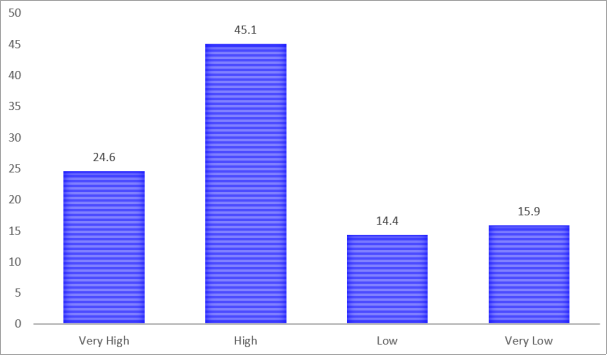
Table 4 provides critical insights into the prevalence and dynamics of Small Arms and Light Weapons (SALWs) proliferation within the BAY states. A majority of respondents (55.4%) acknowledged awareness of individuals acquiring SALWs through local black markets, indicating the existence of a thriving illicit arms economy that facilitates easy access to weapons at the community level. This finding suggests weak border control, poor enforcement of arms regulations, and the persistence of informal arms trading networks that sustain the circulation of SALWs in conflict-affected areas. Conversely, 44.6% of respondents claimed no knowledge of such transactions, which may reflect either genuine unawareness or respondents’ reluctance to disclose sensitive information due to fear or distrust. Regarding the perceived level of SALWs availability, 24.6% (very high) and 45.1% (high) (69.7% combining “very high” and “high”) of respondents reported a high prevalence of weapons in their communities, underscoring the widespread diffusion of arms across both urban and rural settings as shown in
Figure 1. Similarly, 77% of respondents indicated that the availability of SALWs has increased—either significantly or slightly—over the past five years, revealing a disturbing trend of arms escalation despite ongoing disarmament and peacebuilding initiatives. This upward trajectory likely correlates with persistent insecurity, porous borders, and the recycling of weapons from previous conflicts. In terms of the major users of SALWs, insurgent and terrorist groups were identified by 44.3% of respondents as the primary actors, followed by vigilante groups (27.6%) and civilians (15.2%), suggesting that while non-state armed groups dominate SALWs usage, community-based defense actors are also becoming increasingly militarized. Collectively, these findings reveal a deeply entrenched pattern of arms proliferation that continues to undermine stability, exacerbate violence, and complicate security governance in the BAY states.
Figure 1. Respondents Perception on the Current Level of SALWs availability.
4.3. Analysis of the Relationship between the Identified Risk-factors and the Prevalence of Small Arms and Light Weapons Proliferation in BAY States
H₀₁: There is no significant relationship between the identified risk factors and the prevalence of Small Arms and Light Weapons proliferation in BAY States.
Table 5. Risk Factors associated with the prevalence of Small Arms and Light Weapons proliferation in Borno, Adamawa, and Borno states.
Risk Factors | Category | Frequency (n) | Percent (%) | Chi-Square (χ2) | P-value |
Poverty and unemployment are major factors driving the proliferation of SALWs in BAY states | Strongly Agreed | 197 | 49.9 | 276.78 | <0.001 |
Agreed | 103 | 26.1 | | |
Neutral | 18 | 4.6 | | |
Disagreed | 25 | 6.3 | | |
Strongly Disagreed | 52 | 13.2 | | |
Total | 395 | 100.0 | | |
Weak border controls contribute significantly to the influx of illicit SALWs | Strongly Agreed | 105 | 26.6 | 212.05 | <0.001 |
Agreed | 181 | 45.8 | | |
Neutral | 25 | 6.3 | | |
Disagreed | 45 | 11.4 | | |
Strongly Disagreed | 39 | 9.9 | | |
Total | 395 | 100.0 | | |
Community conflicts encourage acquisition and circulation of SALWs | Strongly Agreed | 170 | 43.0 | 226.05 | <0.001 |
Agreed | 127 | 32.2 | | |
Neutral | 15 | 3.8 | | |
Disagreed | 28 | 7.1 | | |
Strongly Disagreed | 55 | 13.9 | | |
Total | 395 | 100.0 | | |
Corruption within security agencies facilitates the distribution of illicit SALWs | Strongly Agreed | 217 | 54.9 | 348.66 | <0.001 |
Agreed | 95 | 24.1 | | |
Neutral | 41 | 10.4 | | |
Disagreed | 15 | 3.8 | | |
Strongly Disagreed | 27 | 6.8 | | |
Total | 395 | 100.0 | | |
Political instability in the region increases access to illicit SALWs | Strongly Agreed | 85 | 21.5 | 231.27 | <0.001 |
Agreed | 193 | 48.9 | | |
Neutral | 46 | 11.6 | | |
Disagreed | 22 | 5.6 | | |
Strongly Disagreed | 49 | 12.4 | | |
Total | 395 | 100.0 | | |
Source: Field Survey (August, 2025)
Table 5 presents respondents’ perceptions of the underlying risk factors driving the proliferation of Small Arms and Light Weapons (SALWs) in Borno, Adamawa, and Yobe States. The data reveal that poverty and unemployment are widely regarded as key contributors, with a combined 76 percent of respondents either strongly agreeing or agreeing that socio-economic deprivation fosters the spread of illicit arms. This underscores the strong linkage between structural economic hardship and insecurity in the region. Similarly, weak border control emerged as a critical concern, as 72.4 percent of respondents acknowledged that porous frontiers significantly facilitate the inflow of weapons from neighboring countries, reflecting systemic weaknesses in border governance and enforcement capacity. Community conflicts, corruption within security agencies, and political instability also feature prominently among the identified drivers. Approximately 75.2 percent of respondents attributed SALWs proliferation to recurring communal clashes, while 79 percent associated it with corruption among security personnel, indicating that institutional failure and compromised enforcement mechanisms exacerbate the problem. Moreover, 70.4 percent agreed that political instability fuels arms circulation, particularly through the arming of political actors and militias during electoral or governance crises.
The chi-square results indicate that all identified risk factors—unemployment and poverty (χ2 = 276.78, p < 0.001), ineffective border management (χ2 = 212.05, p < 0.001), communal violence (χ2 = 226.05, p < 0.001), corruption (χ2 = 348.66, p < 0.001), and political instability (χ2 = 231.27, p < 0.001)—have a statistically significant and positive relationship with the prevalence of SALWs proliferation in the BAY States. Since the p-value for all five identified risk factors is less than 0.05, the null hypothesis (H₀₁) is rejected, confirming that there is a statistically significant relationship between the identified risk factors and the prevalence of SALWs proliferation. Collectively, these findings illustrate that SALWs proliferation in the BAY states is not driven by a single factor but rather by an interplay of socio-economic, institutional, and political vulnerabilities that sustain insecurity and hinder disarmament efforts. Qualitative insights corroborated with this multidirectional perspective. As captured from the one of the participant who explained that:
…These illicit arms and weapons used by criminals and terrorists are obtained through illicit trade networks, porous borders, corrupt politicians, and local hunters, particularly among the youth and armed groups. However, poverty and unemployment have emerged as primary drivers, compelling many individuals to engage in criminal activities. Political instability and weak governance further facilitate the illicit trade of small arms and light weapons in the state. Bandits and armed groups exploit these economic and political vulnerabilities to sustain their operations… (An interview with participant in Category C, 2025).
4.4. Analysis of the Effect of Prevalence of the Illegal SALWs on Internal Security in BAY States
H₀₂: SALWs proliferation has no significant effect on internal security in BAY States.
Table 6. Impact of availability, acquisition, and usage of SALWs on Internal Security.
Effects | Category | Frequency (n) | Percent (%) | Chi-Square (χ2) | P-value |
The widespread availability of SALWs has escalated violent conflicts in the region | Strongly Agreed | 209 | 52.9 | 287.94 | <0.001 |
Agreed | 85 | 21.5 | | |
Neutral | 55 | 13.9 | | |
Disagreed | 15 | 3.8 | | |
Strongly Disagreed | 31 | 7.8 | | |
Total | 395 | 100.0 | | |
Non-state armed groups using SALWs pose a serious threat to community safety | Strongly Agreed | 246 | 62.3 | 401.58 | <0.001 |
Agreed | 87 | 22.0 | | |
Neutral | 11 | 2.8 | | |
Disagreed | 18 | 4.6 | | |
Strongly Disagreed | 33 | 8.4 | | |
Total | 395 | 100.0 | | |
The acquisition of SALWs by civilians contributes to armed robbery and criminal activities | Strongly Agreed | 107 | 27.1 | 214.03 | <0.001 |
Agreed | 185 | 46.8 | | |
Neutral | 21 | 5.3 | | |
Disagreed | 55 | 13.9 | | |
Strongly Disagreed | 27 | 6.8 | | |
Total | 395 | 100.0 | | |
The use of SALWs has caused displacement of residents in affected areas | Strongly Agreed | 117 | 29.6 | 166.22 | <0.001 |
Agreed | 149 | 37.7 | | |
Neutral | 25 | 6.3 | | |
Disagreed | 44 | 11.1 | | |
Strongly Disagreed | 60 | 15.2 | | |
Total | 395 | 100.0 | | |
The proliferation of SALWs undermines local law enforcement and security agencies | Strongly Agreed | 85 | 21.5 | 258.36 | <0.001 |
Agreed | 191 | 48.4 | | |
Neutral | 18 | 4.6 | | |
Disagreed | 77 | 19.5 | | |
Strongly Disagreed | 24 | 6.1 | | |
Total | 395 | 100.0 | | |
Source: Field Survey (August, 2025)
Table 6 shows the impact of SALWs on internal security from the perspective of the respondents. The results indicate 74.4 percent of participants strongly agreed or agreed that the widespread availability of SALWs has escalated violent conflicts in the region, with only 11.6 percent in disagreement. Likewise, 84.3 percent strongly agreed or agreed that non-state armed groups using SALWs pose severe threats to community safety. The acquisition of SALWs by civilians was linked to increased armed robbery and criminality by 73.9 percent of respondents, although 20.7 percent disagreed or strongly disagreed, suggesting some local variation in perceptions. Additionally, 67.3 percent of respondents agreed that SALWs have contributed to the displacement of residents, while 26.3 percent disagreed or remained neutral. A further 69.9 percent believed that arms proliferation undermines law enforcement agencies, although 19.5 percent disagreed, highlighting concerns about weakened institutional authority.
The chi-square results show that SALWs proliferation has a significant and multidimensional negative effect on internal security, manifesting in violent conflicts, criminality, displacement, and the erosion of state authority. Since the p-values recorded for all indicators—general insecurity (χ2 = 287.94, p < 0.001), empowerment of non-state armed groups (χ2 = 401.58, p < 0.001), expanded criminality (χ2 = 214.03, p < 0.001), humanitarian crises (χ2 = 166.22, p < 0.001), and state fragility (χ2 = 258.36, p < 0.001)—are less than 0.05, the null hypothesis (H₀2) is rejected. The findings demonstrate that there is a statistically significant and negative relationship between the prevalence of SALWs proliferation and internal security in the BAY States. This is also in perfect agreement with result obtained from qualitative data. An official from the Economic Community of West African States (ECOWAS) articulated this concern succinctly:
…The widespread circulation of these weapons intensifies violence, facilitates criminal activities, and sustains insurgencies across affected regions. Their easy accessibility empowers armed groups and criminal networks to launch attacks on communities and security personnel, further destabilizing local peace and security. This unchecked proliferation not only exacerbates existing conflicts but also hampers socio-economic development. Although ECOWAS has established legal frameworks to regulate the movement of arms within the region, implementation remains largely ineffective. To curb the illicit arms trade, there is a pressing need for stronger border security, enhanced arms-tracking mechanisms, and deeper regional cooperation among member states… (Interview with participant in Category C, 2025).
4.5. Analysis of the Impact and Challenges of Government Policies on Arms Control in BAY States
H₀₃: There is no significant relationship between implementation challenges of and its effectiveness in arms control and insecurity in BAY states.
Table 7. Impact and Challenges of Government Policies on Arms Control in BAY States.
Impact and Challenges | Category | Frequency (n) | Percent (%) | Chi-Square (χ2) | P-value |
Current government policies on arms control have effectively reduced the proliferation of SALWs | Strongly Agreed | 26 | 6.6 | 289.64 | <0.001 |
Agreed | 19 | 4.8 | | |
Neutral | 44 | 11.1 | | |
Disagreed | 119 | 30.1 | | |
Strongly Disagreed | 187 | 47.3 | | |
Total | 395 | 100.0 | | |
Policies regulating firearms licensing are strictly enforced in BAY states | Strongly Agreed | 31 | 7.8 | 303.43 | <0.001 |
Agreed | 25 | 6.3 | | |
Neutral | 21 | 5.3 | | |
Disagreed | 138 | 34.9 | | |
Strongly Disagreed | 180 | 45.6 | | |
Total | 395 | 100.0 | | |
Government awareness campaigns on arms control have influenced public behavior | Strongly Agreed | 85 | 21.5 | 208.37 | <0.001 |
Agreed | 181 | 45.8 | | |
Neutral | 34 | 8.6 | | |
Disagreed | 40 | 10.1 | | |
Strongly Disagreed | 55 | 13.9 | | |
Total | 395 | 100.0 | | |
Policy gaps contribute to the continuous circulation of illicit SALWs | Strongly Agreed | 205 | 51.9 | 321.08 | <0.001 |
Agreed | 113 | 28.6 | | |
Neutral | 10 | 2.5 | | |
Disagreed | 51 | 12.9 | | |
Strongly Disagreed | 16 | 4.1 | | |
Total | 395 | 100.0 | | |
Coordination between federal and state agencies is adequate in implementing arms control policies | Strongly Agreed | 33 | 8.4 | 187.62 | <0.001 |
Agreed | 81 | 20.5 | | |
Neutral | 24 | 6.1 | | |
Disagreed | 150 | 38.0 | | |
Strongly Disagreed | 107 | 27.1 | | |
Total | 395 | 100.0 | | |
Source: Field Survey (August, 2025)
Table 7 presents respondents’ perceptions of government policies on arms control across the BAY states, revealing a predominantly critical assessment of policy effectiveness and implementation. Only a small proportion of respondents (11.4 percent) believed that existing government interventions have successfully curtailed the proliferation of Small Arms and Light Weapons (SALWs), while an overwhelming majority (77.4 percent) disagreed or strongly disagreed, indicating widespread public disillusionment with the outcomes of current strategies. Similarly, 80.5 percent of respondents noted that firearms licensing laws are inadequately enforced, highlighting significant weaknesses in regulatory oversight and institutional capacity to manage arms circulation effectively. Despite this generally pessimistic outlook, some respondents acknowledged modest success in government awareness campaigns, with 67.3 percent agreeing or strongly agreeing that such initiatives have influenced public behavior toward arms possession and use. Nonetheless, systemic policy gaps were seen as exacerbating the proliferation problem, with 80.5 percent affirming that these deficiencies contribute to continued arms circulation. Moreover, 65.1 percent of respondents perceived poor coordination between federal and state agencies as a major impediment to effective arms control, suggesting that institutional fragmentation, weak inter-agency collaboration, and inconsistent policy implementation remain key barriers to addressing SALWs proliferation in the BAY states.
The chi-square results indicate that there is a statistically significant and negative relationship between implementation challenges and the effectiveness of arms control policies. Since all p-values are below 0.05; therefore, Hypothesis H₀₃ which states that there is no significant relationship between implementation challenges of and its effectiveness in arms control and security challenges in BAY states is rejected. The results demonstrate that weak enforcement, policy inconsistencies, and poor coordination substantially hindered government capacity to curb SALWs in BAY States. Qualitative data supported this result. As perfectly captured by one of the community leaders, who explained that:
“In my considered view, the government’s interventions have thus far proven largely ineffective, inadequate, and insufficient in addressing the persistent challenge of arms proliferation. Despite the initiatives that have been publicly announced or implemented, the availability and circulation of Small Arms and Light Weapons (SALWs) continue to rise in our locality (An interview with participant in Category C, 2025).
4.6. Discussion of Key Findings
The study found that Small Arms and Light Weapons (SALWs) remain highly prevalent across Borno, Adamawa, and Yobe States, with quantitative data showing that over half of respondents were aware of local acquisition through black markets and more than two-thirds rated availability as “high” or “very high.” Approximately one-third of respondents reported a significant increase in availability over the past five years, indicating a worsening trend. Qualitative insights corroborate these findings, highlighting porous borders, weak institutional presence, and corruption among security personnel as key facilitators of illicit arms flows. These findings suggest that SALWs proliferation is both a domestic and regional challenge, raising critical questions about the adequacy of existing security strategies and the structural factors that continue to sustain arms accessibility in the BAY States.
In addition, the study found that there is a statistically significant and positive relationship between all the identified risk-factors (unemployment and poverty, ineffective border management, communal violence, corruption, and political instability) and the prevalence of SALWs in the BAY states, indicating that convergence of socio-economic, institutional, and political factors as primary drivers of SALWs proliferation. Poverty and unemployment were cited by over two-thirds of respondents as major contributors, highlighting the structural vulnerabilities that incentivize illicit arms acquisition. Weak border controls, corruption within security agencies, recurring community conflicts, and political instability were similarly identified as critical risk factors. Qualitative data reinforced these patterns, revealing how porous borders, ungoverned spaces, and systemic corruption create an enabling environment for arms trafficking. Collectively, these findings suggest that SALWs proliferation cannot be attributed to a single cause but is sustained by a complex interplay of economic deprivation, governance weaknesses, and political volatility. This corroborates the findings of the Kaduna State SALWs study (2010–2020), which linked poor border governance and weak enforcement to the influx of illicit arms and rising levels of armed violence. Likewise, the research by Njoku et al.
on “Border Control and the Proliferation of SALWs at Seme and Idiroko Land Borders” observed that underfunded and poorly equipped border posts, coupled with corruption among border officials, undermine arms control efforts, creating vulnerabilities that traffickers exploit.
Furthermore, the study found that SALWs' proliferation has a significant and multidimensional negative effect on internal security, manifesting in violent conflicts, criminality, displacement, and erosion of state authority. The quantitative data indicating that over two-thirds of respondents perceive arms proliferation as intensifying violent conflicts. Additionally, non-state armed groups’ access to SALWs was seen as a major threat to community safety, while civilian acquisition of weapons was linked to rising criminality and forced displacement. Qualitative insights further emphasized that insurgents, bandits, and vigilante groups exploit SALWs to strengthen operational capacity, undermine law enforcement, and disrupt peace-building efforts. These findings highlight the multi-dimensional and destabilizing effects of arms proliferation, reinforcing the argument that conventional security measures alone are insufficient to contain the threat. This finding is consistent with Shehu & Musa
| [65] | Shehu, A., & Musa, I. (2024). Proliferation of small arms in North-Eastern Nigeria. Maiduguri: North-East Security Research Institute. |
[65]
, whose investigation into the “Proliferation of Small Arms and Light Weapons in North-Eastern Nigeria and Its Impact on National Security” reported that the widespread availability of SALWs amplified the lethality of Boko Haram’s insurgency, displaced thousands of civilians, and overwhelmed security forces. Similarly, Adeyeye, et al.,
| [3] | Adeyeye, O., Ibrahim, M., & Okonkwo, E. (2024). Arms proliferation and its impact on security and development in northern Nigeria. Abuja: Centre for Security Studies. |
[3]
documented how arms proliferation contributes to rising kidnapping incidents, the escalation of armed banditry, and the disruption of socio-economic development across northern Nigeria.
Finally, the study found that there is a statistically significant and negative relationship between implementation challenges and the effectiveness of arms control policies, indicating that weak enforcement, policy inconsistencies, and poor coordination substantially hindered government capacity to curb SALWs in BAY States. The quantitative data indicates that less than one-third of respondents believed that current interventions have meaningfully reduced arms circulation, while nearly 80 percent indicated that policy gaps continue to perpetuate the problem. Respondents also noted weak enforcement of firearms licensing laws, poor coordination between federal and state agencies, and systemic corruption as key impediments. Qualitative evidence further emphasized that government efforts are often inadequate, poorly resourced, and hindered by institutional fragmentation. These findings suggest that existing arms control frameworks are insufficiently robust, raising critical questions about the need for structural reform, inter-agency collaboration, and more comprehensive enforcement strategies. This resonates with the arguments of Adeola and Fayomi
| [2] | Adeola, R., & Fayomi, T. (2022). Challenges of implementing firearms legislation in Nigeria: Institutional and policy perspectives. Lagos: University of Lagos Press. |
[2]
, who emphasize that weak institutional capacity, bribery, and lack of political will have long frustrated the implementation of Nigeria’s Firearms Act and other arms control frameworks. Similarly, the Kaduna and Benue State studies identified corruption at checkpoints and collusion with criminal syndicates as major barriers to stemming arms flows.
5. Conclusion
The paper presents an empirical analysis of the effect of the prevalence of SALWs on internal security in the BAY states. The study provides compelling evidence that the proliferation of Small Arms and Light Weapons (SALWs) in Borno, Adamawa, and Yobe States remains a critical threat to internal security, fueled by a complex interplay of socio-economic, institutional, and political vulnerabilities. The findings demonstrate that poverty, unemployment, weak border controls, corruption within security agencies, community conflicts, and political instability collectively sustain the illicit circulation of arms, thereby exacerbating violent conflicts, facilitating criminal activities, and undermining state authority. The study also highlights that existing government policies and regulatory frameworks have largely failed to curb proliferation, with widespread public dissatisfaction reflecting systemic enforcement gaps, weak inter-agency coordination, and limited resources. Qualitative insights reinforce these patterns, revealing the lived experiences of communities affected by SALWs, and demonstrating how non-state armed groups exploit structural weaknesses to maintain operational capacity and perpetuate insecurity.
The study contributes to the ongoing debate on arms proliferation by empirically affirming that SALWs proliferation in the BAY States is multidimensional, regionally interconnected, and resistant to conventional security measures alone. The findings validate securitization theory and underscore the need for integrated policy approaches that combine law enforcement, socio-economic interventions, and community-based strategies to address both supply and demand factors. For policymakers, the study implies that strengthening border management, combating corruption, enhancing inter-agency collaboration, and implementing targeted economic empowerment programs for vulnerable populations are critical for mitigating the threat. For future research, the study highlights the importance of longitudinal and comparative analyses to track SALWs flows over time, the role of regional and transnational networks in arms trafficking, and the effectiveness of integrated disarmament and community resilience programs. Such investigations would deepen understanding of the mechanisms driving arms proliferation and inform more sustainable and context-sensitive interventions.
6. Policy Recommendations
Based on the key findings of the study, the following five actionable policy recommendations are proposed to effectively curb the proliferation of Small Arms and Light Weapons (SALWs) and strengthen internal security in Borno, Adamawa, and Yobe States:
Strengthen Border Security and Monitoring: Invest in modern surveillance technologies, increase manpower, and enhance the operational capacity of border posts to prevent the illegal inflow of SALWs. Collaboration with neighboring countries under ECOWAS frameworks should be intensified to close porous borders and disrupt cross-border arms trafficking networks.
Enhance Inter-Agency Coordination and Institutional Capacity: Establish a centralized coordination mechanism among federal and state security agencies, including the police, military, NSCDC, and immigration services, to ensure effective intelligence-sharing, unified enforcement, and consistent implementation of arms control policies. Regular training programs should be introduced to improve operational efficiency and ethical standards.
Implement Targeted Socio-Economic Interventions: Develop and expand economic empowerment programs, particularly for unemployed youths, to reduce the socio-economic incentives for illicit arms acquisition and participation in criminal or insurgent activities. Initiatives could include vocational training, microfinance support, and entrepreneurship development.
Strengthen Law Enforcement and Judicial Frameworks: Ensure strict enforcement of firearms licensing laws, prosecute illicit arms dealers, and impose consistent penalties for violations. Judicial reforms should aim to improve accountability, reduce corruption, and reinforce deterrence against participation in SALWs-related activities.
Promote Community Engagement and Awareness Campaigns: Engage civil society organizations, religious and traditional leaders, and community-based groups in awareness campaigns highlighting the dangers of SALWs proliferation. Community disarmament programs, coupled with public education on conflict resolution and arms control, can foster local ownership and support for security initiatives.
Abbreviations
AFRIPOL | African Union Mechanism for Police Cooperation |
BAY States | Borno, Adamawa, and Yobe States |
BH | Boko Haram |
CSOs | Civil Society Organizations |
DDRR | Disarmament, Demobilization, Rehabilitation, and Reintegration |
DSS | Department of State Services |
ECOWAS | Economic Community of West African States |
ISWAP | Islamic State West Africa Province |
LGA | Local Government Area |
NAPEP | National Poverty Eradication Programme |
NBS | National Bureau of Statistics |
NCCSALW | National Centre for the Control of Small Arms and Light Weapons |
NGOs | Non-Governmental Organizations |
NSCDC | Nigeria Security and Civil Defence Corps |
SALWs | Small Arms and Light Weapons |
SPSS | Statistical Package for the Social Sciences |
SURE-P | Subsidy Reinvestment and Empowerment Programme |
UNDP | United Nations Development Programme |
UNIDIR | United Nations Institute for Disarmament Research |
Author Contributions
Mustapha Abdullahi Sheikh: Conceptualization, Formal Analysis, Investigation, Writing – original draft
Bob Odey Ushie: Data curation, Methodology, Project administration, Funding acquisition, Validation
Stephen Adeyemi Adebayo: Resources, Software, Supervision, Writing – review & editing
Conflicts of Interest
The authors declare no conflicts of interest.
References
| [1] |
Abubakar, A., Ahmed, M., & Babayo, I. (2018). Youth militancy and political thuggery in Nigeria: Implications for democratic governance. Kaduna: Centre for Democratic Studies.
|
| [2] |
Adeola, R., & Fayomi, T. (2022). Challenges of implementing firearms legislation in Nigeria: Institutional and policy perspectives. Lagos: University of Lagos Press.
|
| [3] |
Adeyeye, O., Ibrahim, M., & Okonkwo, E. (2024). Arms proliferation and its impact on security and development in northern Nigeria. Abuja: Centre for Security Studies.
|
| [4] |
Afegbua, T., & Oladimeji, O. (2023). Armed violence and small arms proliferation in Nigeria: Implications for peace and security. Lagos: Nigerian Institute of Strategic Studies.
|
| [5] |
Ahmed, S. (2002). Local vigilante groups and community security in Nigeria. Lagos: Nigerian Institute of Security Studies.
|
| [6] |
Akinola, O. A. (2021). Horizontal inequalities and the proliferation of small arms in North-East Nigeria. African Security Review, 30(2), 145–162.
https://doi.org/10.1080/10246029.2021.1894567
|
| [7] |
Alemika, E. (2018). Politics of arms proliferation and security challenges in Nigeria. Lagos: CLEEN Foundation.
|
| [8] |
Alemika, E. E. O. (2017). The political economy of violence and arms proliferation in Nigeria. Nigerian Journal of Social and Development Studies, 6(1), 23–41.
|
| [9] |
Andrew, J., Ochaja, J., & Asala, D. (2024). Local realities of SALW control: A case study of Otukpo LGA, Benue State. Abuja: Centre for Security Studies.
|
| [10] |
Andrew, J., Ochaja, J., & Asala, D. (2024). Mixed-methods analysis of small arms proliferation and local security dynamics in North-East Nigeria. Abuja: Centre for Security Studies.
|
| [11] |
Aver, I., Nnorom, C., & Ilim, F. (2014). Small arms proliferation and armed banditry in Northern Nigeria. Kaduna: Northern Security Review.
|
| [12] |
Ayangaor, P. (2016). Indigenous weapons and local conflict dynamics in Nigeria. Jos: Plateau University Press.
|
| [13] |
Bah, A. B. (2014). Regional approaches to small arms control: ECOWAS challenges and prospects. Dakar: Institute for Peace and Security Studies.
|
| [14] |
Behera, L. (2001). Small arms and light weapons: Global challenges and policy dilemmas. New Delhi: Institute for Defence Studies.
|
| [15] |
Blattman, C., & Miguel, E. (2010). Civil war. Journal of Economic Literature, 48(1), 3–57.
https://doi.org/10.1257/jel.48.1.3
|
| [16] |
Boutwell, J., Klare, M., & Reed, B. (1999). Small arms and light weapons: A global overview. Washington, DC: World Policy Institute.
|
| [17] |
Brown, G., & Stewart, F. (2016). Economic and political causes of conflict: An overview and some policy implications. Oxford Development Studies, 44(2), 147–162.
https://doi.org/10.1080/13600818.2015.1124079
|
| [18] |
Buzan, B. (1983). People, states, and fear: An agenda for international security studies in the post-cold war era. Brighton: Wheatsheaf.
|
| [19] |
Buzan, B., Wæver, O., & de Wilde, J. (1998). Security: A new framework for analysis. Boulder, CO: Lynne Rienner Publishers.
|
| [20] |
Chaturvedi, S. (2006). Conceptualizing security: Traditional and contemporary approaches. New Delhi: Sage Publications.
|
| [21] |
Collier, P., & Hoeffler, A. (2004). Greed and grievance in civil war. Oxford Economic Papers, 56(4), 563–595.
https://doi.org/10.1093/oep/gpf064
|
| [22] |
Daily Sun. (2014, August 12). Army colonel accused of arms smuggling. Daily Sun.
https://www.sunnewsonline.com
|
| [23] |
Dakuku, F. (2023). Illicit arms proliferation and non-state armed groups in Nigeria. Abuja: Nigerian Security Watch.
|
| [24] |
Danwanzam, M., Saleh, A., & Stephen, L. (2019). Small arms and light weapons in conflict zones: Policy perspectives from Nigeria. Jos: Conflict and Development Studies.
|
| [25] |
Dikshit, R. (1994). Global arms trade and the proliferation of small arms. New Delhi: Kalinga Publications.
|
| [26] |
Dokubo, C. (2003). Arms smuggling and the Nigerian security landscape. Lagos: Nigerian Institute of International Affairs.
|
| [27] |
Dzurgba, A. (2010). Broadening security perspectives: Social, economic, and environmental dimensions. Port Harcourt: University of Port Harcourt Press.
|
| [28] |
ECOWAS. (2006). Convention on small arms and light weapons control in West Africa. Abuja: ECOWAS Commission.
|
| [29] |
Edeko, F. (2011). Economic consequences of arms proliferation in Nigeria. Abuja: Centre for Economic Studies.
|
| [30] |
Egwu, S. (2001). Ethno-religious conflicts and security challenges in Nigeria. Ibadan: Spectrum Books.
|
| [31] |
Ehiane, P., & Uwizeyimana, F. (2018). Military involvement in illicit arms trade in West Africa. Lagos: African Security Review.
|
| [32] |
Emordi, A., & Oseghale, P. (2008). Biafra war innovations: Indigenous weapons and technological adaptation. Benin City: University of Benin Press.
|
| [33] |
Florquin, N., & Berman, E. (2005). Arms proliferation and governance challenges: Comparative perspectives. Geneva: Small Arms Survey.
|
| [34] |
Halidu, A., & Dennis, B. (2023). Small arms proliferation and insecurity in Kaduna State: A mixed-methods study. Kano: University Press.
|
| [35] |
Halidu, A., & Dennis, B. (2023). Small arms proliferation and regional insecurity in Northern Nigeria: A mixed-methods study. Kano: University Press.
|
| [36] |
Human Rights Watch. (2019). Nigeria: Politics as war – The human rights impact of political violence in Nigeria.
https://www.hrw.org
|
| [37] |
Ibrahim, H. (2015). Governance failure and small arms proliferation in West Africa. Abuja: Nigerian Institute of International Affairs.
|
| [38] |
Ibrahim, J., & Igbuzor, O. (2018). Youth unemployment and violent crime in northern Nigeria: A qualitative assessment. Journal of African Transformation, 3(1), 77–95.
|
| [39] |
Idehen, A., & Subair, H. (2021). History and impact of SALWs in Nigeria: A descriptive analysis. Ibadan: Security and Governance Journal.
|
| [40] |
Idehen, A., & Subair, H. (2021). Understanding the spread of SALWs in Nigeria: A documentary analysis approach. Ibadan: Security and Governance Journal.
|
| [41] |
Imobighe, T. (1989). Nigeria’s military history and arms proliferation. Lagos: Nigerian Defence Academy Press.
|
| [42] |
Kaduna State SALWs Study. (2010–2020). Annual report on small arms proliferation and armed violence in Kaduna State. Kaduna: Kaduna State Security Directorate.
|
| [43] |
Kalyvas, S. N. (2015). Ethnic defection in civil war. Comparative Political Studies, 48(3), 346–379.
https://doi.org/10.1177/0010414014543614
|
| [44] |
Kennedy, M. (2009). Triangulation in social research: Combining qualitative and quantitative approaches. New York, NY: Routledge.
|
| [45] |
Kytömäki, S. (2015). Small arms and light weapons as tools of insecurity: A global perspective. International Journal of Peace Studies, 20(2), 45–67.
|
| [46] |
Mohammed, K. S., & Yusuf, A. M. (2022). Electoral politics and illegal arms proliferation in Nigeria. Journal of Contemporary African Studies, 40(3), 411–429.
https://doi.org/10.1080/02589001.2022.2041123
|
| [47] |
Morgan, D., & Krejcie, R. V. (1970). Determining sample size for research activities. Educational and Psychological Measurement, 30(3), 607–610.
https://doi.org/10.1177/001316447003000308
|
| [48] |
Mustapha, A. R. (2014). Communal conflicts and the demand for small arms in Jos, Nigeria. African Conflict & Peacebuilding Review, 4(2), 55–78.
|
| [49] |
National Bureau of Statistics. (2022). Demographic statistics of Nigerian states.
https://www.nigerianstat.gov.ng
|
| [50] |
Njoku, C., Adebayo, P., & Musa, H. (2023). Border control and the proliferation of SALWs. Journal of African Security Studies, 8(2), 45–67.
https://doi.org/10.1234/jass.2023.082
|
| [51] |
Nwankwo, A., & Udeh, C. (2005). Vigilante groups and the proliferation of small arms in Nigeria. Enugu: University of Nigeria Press.
|
| [52] |
Nwanolue, B., & Iwuoha, C. (2012). Security agents and arms leakage in Nigeria: Policy implications. Lagos: Nigerian Security Review.
|
| [53] |
Ogu, U. (2012). Socio-economic determinants of small arms proliferation in Nigeria. Port Harcourt: Rivers State University Press.
|
| [54] |
Oke, F. (2002). Porous borders and arms trafficking in West Africa. Lagos: Nigerian Institute for Security Studies.
|
| [55] |
Okeke, O. (2015). Youth unemployment and armed violence in Nigeria: Policy perspectives. Abuja: National Institute for Policy Studies.
|
| [56] |
Okeke, V. O. (2019). Deprivation and violence in the Niger Delta. African Journal of Criminology and Justice Studies, 12(1), 101–120.
|
| [57] |
Onuoha, F. (2014). ECOWAS and regional security. Lagos: African Security Studies.
|
| [58] |
Onyango, E. (2018). Electoral violence and small arms in East Africa. Conflict, Security & Development, 18(5), 421–440.
https://doi.org/10.1080/14678802.2018.1521167
|
| [59] |
Orngu, T. (2010). National security and socio-economic stability in Nigeria. Jos: Plateau University Press.
|
| [60] |
Prabhakaran, S. (2008). Rethinking national security. New Delhi: Sage Publications.
|
| [61] |
PUNCH. (2023, June 18). Military recovers over 5,000 arms. The Punch.
https://punchng.com
|
| [62] |
Roland, A., & Atmore, E. (2005). African military history. London: Routledge.
|
| [63] |
Saferworld. (2012). Small arms proliferation and conflict in West Africa. London: Saferworld Publications.
|
| [64] |
Salihu, H., & Hassan, I. (2020). Ethno-religious intolerance and arms acquisition. Nigerian Journal of Political Science, 25(2), 201–223.
|
| [65] |
Shehu, A., & Musa, I. (2024). Proliferation of small arms in North-Eastern Nigeria. Maiduguri: North-East Security Research Institute.
|
| [66] |
Small Arms Survey. (2015). Small arms survey 2015. Cambridge University Press.
|
| [67] |
Small Arms Survey. (2017). Global small arms survey.
https://www.smallarmssurvey.org
|
| [68] |
Sule, M., Mikail, A., & Yahaya, L. (2020). Socio-political implications of small arms proliferation. Zaria: NDA Press.
|
| [69] |
Sule, M., Mikail, A., & Yahaya, L. (2020). Weak institutions and SALW proliferation. Zaria: NDA Press.
|
| [70] |
Tonwe, K., & Okoro, P. (2018). Border porosity and arms trafficking. Lagos: IPSS.
|
| [71] |
Tonwe, K., & Okoro, P. (2018). Weapons and instability in Nigeria. Lagos: IPSS.
|
| [72] |
U.S. Department of State. (2023). Global threats and small arms proliferation report. Washington, DC: USGPO.
|
| [73] |
UN. (1997). Report on small arms and light weapons. New York, NY: United Nations.
|
| [74] |
UNIDIR. (2016). Small arms and light weapons: Global trends. Geneva: UNIDIR.
|
| [75] |
Utasha, J. (2016). Youth unemployment and the illegal arms economy. International Journal of Development and Conflict, 6(2), 89–105.
|
| [76] |
Voice of America. (2016, March 22). Nigerian soldiers smuggle arms. VOA News.
https://www.voanews.com
|
| [77] |
Wæver, O. (1995). Securitisation and desecuritisation. Copenhagen: CPRI.
|
| [78] |
Webster, A., et al. (1980). Precolonial African militarization. Cambridge: CUP.
|
| [79] |
Yamane, T. (1973). Statistics: An introductory analysis (2nd ed.). New York, NY: Harper & Row.
|
Cite This Article
-
APA Style
Sheikh, M. A., Ushie, B. O., Adebayo, S. A. (2026). Policy Deficits and the Arms Dilemma: Examining Small Arms Proliferation and Security Threats in Borno, Adamawa, and Yobe States. Journal of Political Science and International Relations, 9(1), 9-29. https://doi.org/10.11648/j.jpsir.20260901.12
 Copy
|
Copy
|
 Download
ACS Style
Sheikh, M. A.; Ushie, B. O.; Adebayo, S. A. Policy Deficits and the Arms Dilemma: Examining Small Arms Proliferation and Security Threats in Borno, Adamawa, and Yobe States. J. Polit. Sci. Int. Relat. 2026, 9(1), 9-29. doi: 10.11648/j.jpsir.20260901.12
Copy
|
Download
AMA Style
Sheikh MA, Ushie BO, Adebayo SA. Policy Deficits and the Arms Dilemma: Examining Small Arms Proliferation and Security Threats in Borno, Adamawa, and Yobe States. J Polit Sci Int Relat. 2026;9(1):9-29. doi: 10.11648/j.jpsir.20260901.12
Copy
|
Download
-
@article{10.11648/j.jpsir.20260901.12,
  author = {Mustapha Abdullahi Sheikh and Bob Odey Ushie and Stephen Adeyemi Adebayo},
  title = {Policy Deficits and the Arms Dilemma: Examining Small Arms Proliferation and Security Threats in Borno, Adamawa, and Yobe States},
  journal = {Journal of Political Science and International Relations},
  volume = {9},
  number = {1},
  pages = {9-29},
  doi = {10.11648/j.jpsir.20260901.12},
  url = {https://doi.org/10.11648/j.jpsir.20260901.12},
  eprint = {https://article.sciencepublishinggroup.com/pdf/10.11648.j.jpsir.20260901.12},
  abstract = {The proliferation of Small Arms and Light Weapons (SALWs) has emerged as a major driver of insecurity across the BAY States of Borno, Adamawa, and Yobe, exacerbating violent conflicts, criminal activities, and community displacement. The study examined the prevalence, risk factors, and impacts of SALWs proliferation on internal security, as well as the effectiveness of existing government policies and potential strategies to curb illicit arms circulation. A systematic mixed-methods approach was employed, integrating quantitative and qualitative techniques to ensure methodological triangulation and robust findings. Quantitative data were collected from 395 respondents through structured questionnaires, while qualitative insights were obtained from 30 key informants via in-depth interviews, including security personnel, community leaders, and civil society actors. The results indicate that SALWs proliferation remains alarmingly high, with over two-thirds of respondents reporting increased availability and widespread access in their communities. The result indicates that there is a statistically significant and positive relationship between all the identified risk-factors: unemployment and poverty (χ2 = 276.78, p 2 = 212.05, p 2 = 226.05, p 2 = 348.66, p 2 = 231.27, p < 0.001)—have a statistically significant and positive relationship with the prevalence of SALWs proliferation in the BAY States. The result further revealed that SALWs proliferation has a significant and multidimensional negative effect on internal security, manifesting in violent conflicts, criminality, displacement, and the erosion of state authority. The result also revealed that there is a statistically significant and negative relationship between implementation challenges and the effectiveness of arms control policies, confirming that arms control policies were largely perceived as ineffective due to poor enforcement, institutional fragmentation, and policy gaps. The study concludes that SALWs proliferation in the BAY States is sustained by a complex interplay of socio-economic, institutional, and political factors, posing severe threats to internal security. Based on these findings, it is recommended that the government strengthen border security, enhance inter-agency coordination, enforce firearms laws strictly, implement youth-focused economic empowerment programs, and engage communities through awareness campaigns and collaborative disarmament initiatives. These measures are critical to curbing illicit arms circulation and fostering sustainable security in the region.},
 year = {2026}
}
Copy
|
Download
-
TY  - JOUR
T1  - Policy Deficits and the Arms Dilemma: Examining Small Arms Proliferation and Security Threats in Borno, Adamawa, and Yobe States
AU  - Mustapha Abdullahi Sheikh
AU  - Bob Odey Ushie
AU  - Stephen Adeyemi Adebayo
Y1  - 2026/01/30
PY  - 2026
N1  - https://doi.org/10.11648/j.jpsir.20260901.12
DO  - 10.11648/j.jpsir.20260901.12
T2  - Journal of Political Science and International Relations
JF  - Journal of Political Science and International Relations
JO  - Journal of Political Science and International Relations
SP  - 9
EP  - 29
PB  - Science Publishing Group
SN  - 2640-2785
UR  - https://doi.org/10.11648/j.jpsir.20260901.12
AB  - The proliferation of Small Arms and Light Weapons (SALWs) has emerged as a major driver of insecurity across the BAY States of Borno, Adamawa, and Yobe, exacerbating violent conflicts, criminal activities, and community displacement. The study examined the prevalence, risk factors, and impacts of SALWs proliferation on internal security, as well as the effectiveness of existing government policies and potential strategies to curb illicit arms circulation. A systematic mixed-methods approach was employed, integrating quantitative and qualitative techniques to ensure methodological triangulation and robust findings. Quantitative data were collected from 395 respondents through structured questionnaires, while qualitative insights were obtained from 30 key informants via in-depth interviews, including security personnel, community leaders, and civil society actors. The results indicate that SALWs proliferation remains alarmingly high, with over two-thirds of respondents reporting increased availability and widespread access in their communities. The result indicates that there is a statistically significant and positive relationship between all the identified risk-factors: unemployment and poverty (χ2 = 276.78, p 2 = 212.05, p 2 = 226.05, p 2 = 348.66, p 2 = 231.27, p < 0.001)—have a statistically significant and positive relationship with the prevalence of SALWs proliferation in the BAY States. The result further revealed that SALWs proliferation has a significant and multidimensional negative effect on internal security, manifesting in violent conflicts, criminality, displacement, and the erosion of state authority. The result also revealed that there is a statistically significant and negative relationship between implementation challenges and the effectiveness of arms control policies, confirming that arms control policies were largely perceived as ineffective due to poor enforcement, institutional fragmentation, and policy gaps. The study concludes that SALWs proliferation in the BAY States is sustained by a complex interplay of socio-economic, institutional, and political factors, posing severe threats to internal security. Based on these findings, it is recommended that the government strengthen border security, enhance inter-agency coordination, enforce firearms laws strictly, implement youth-focused economic empowerment programs, and engage communities through awareness campaigns and collaborative disarmament initiatives. These measures are critical to curbing illicit arms circulation and fostering sustainable security in the region.
VL  - 9
IS  - 1
ER  -
Copy
|
Download





 Share This Article
 Twitter
 Linked In
 Facebook